Hip Impingement
Hip Impingement, or femoroacetabular impingement (FAI), is a a condition that involves limited range of motion of the hip due to limited clearance. The abnormal structure of the hip causes limitations in motion and bruising/pinching of the soft tissue around the hip. This is a condition most frequently seen in athletes, but can exist due to the structure of the hip that is not related to sports or injuries.
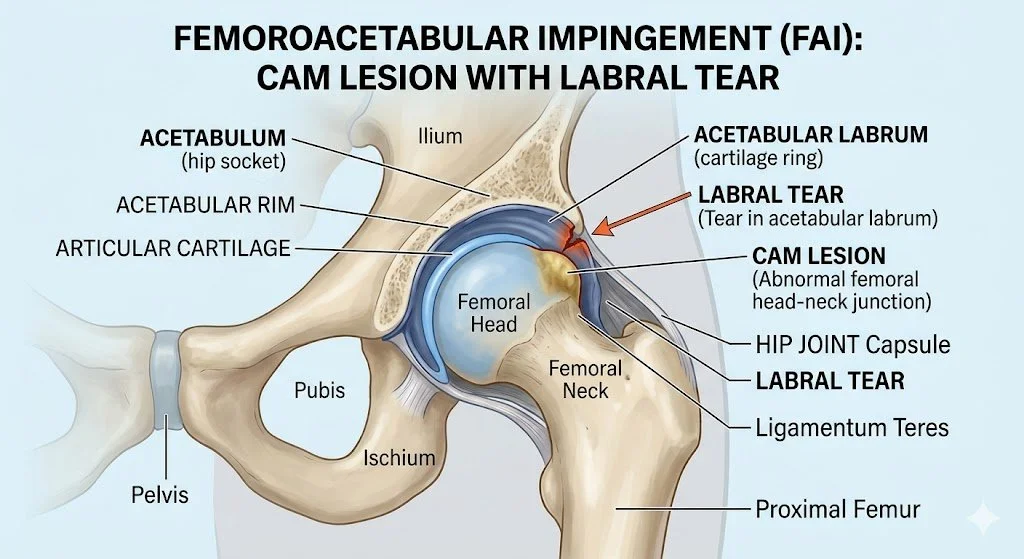
What are symptoms of femoroacetabular impingement?
deep aching pain in the groin or buttock
sharp pain with activities like running, squatting, and sitting
limping or difficulty with exercise
stiffness or reduced motion
Treatment
Non-Surgical Treatments
These are often the first steps, especially if symptoms are mild:
Physical therapy: Strengthens hip muscles, improves movement, and reduces stress on the joint.
Activity modification: Avoiding deep squats, lunges, or prolonged sitting can help reduce pain.
Anti-inflammatory medications: Can ease pain and swelling.
Injections: Cortisone or other medications may be used to reduce inflammation and confirm the source of pain. Multiple steroid injections are not safe in young patients with healthy cartilage, as they may cause cartilage damage long-term.
Surgical Treatment: Hip Arthroscopy or Open Hip Surgery
If symptoms persist or the labrum and cartilage are damaged, surgery may be recommended:
Hip arthroscopy is a minimally invasive procedure.
The surgeon reshapes the bone to prevent pinching and repairs the labrum if torn.
Most patients go home the same day and begin rehab within a few weeks.
Sometimes a different problem like femoral version or acetabular malorientation may be causing the labrum to tear. If so, additional procedures may be recommended, including femoral derotational osteotomy or periacetabular osteotomy.